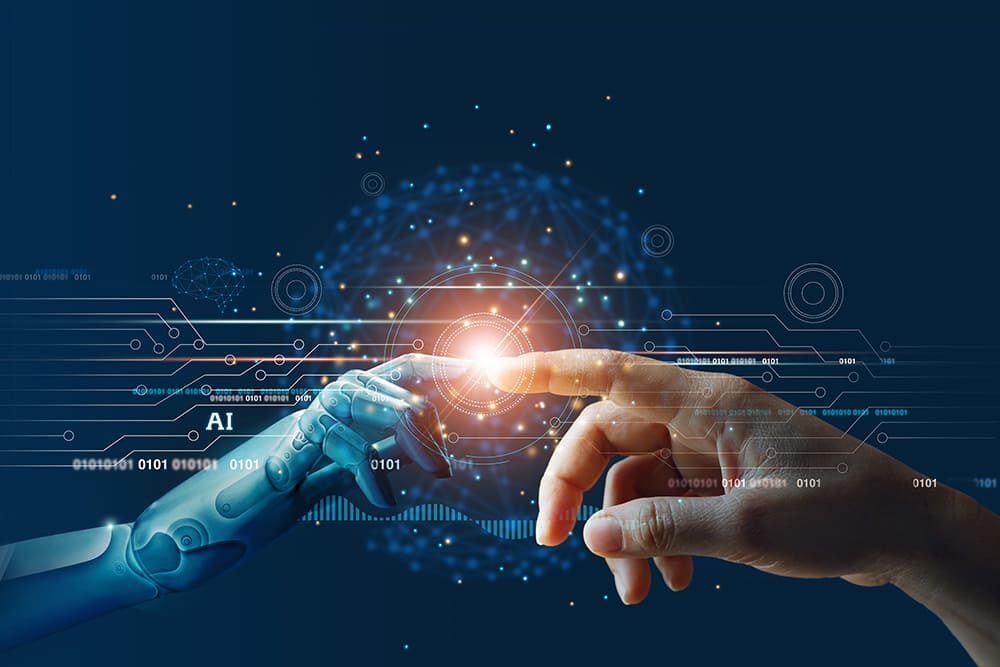
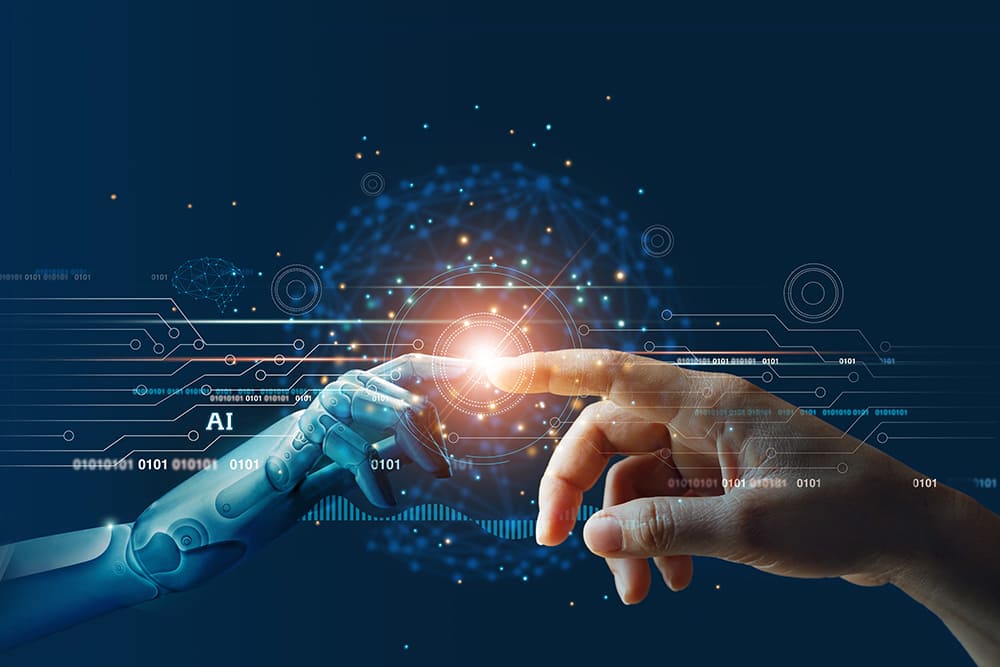
Artificial Intelligence (AI) is no longer a distant concept from science fiction—it is a transformative force actively reshaping our present and redefining our future. From smartphones and smart homes to healthcare diagnostics and self-driving cars, AI is embedded in daily life in ways that were unimaginable just a decade ago. As we move toward 2030 and beyond, the influence of AI will only deepen, touching nearly every industry, economy, and aspect of human existence.
This article explores artificial intelligence and the future, examining how AI will evolve, where it will have the most impact, the opportunities it presents, and the challenges humanity must navigate to ensure a balanced and ethical future.
What Is Artificial Intelligence?
Artificial Intelligence refers to computer systems designed to perform tasks that normally require human intelligence. These tasks include learning, reasoning, problem-solving, understanding language, recognizing patterns, and making decisions.
AI can be broadly categorized into three types:
1. Narrow AI (Weak AI)
This is the most common form today. Narrow AI is designed to perform a specific task efficiently, such as:
- Voice assistants (Siri, Alexa)
- Recommendation algorithms (Netflix, YouTube)
- Image recognition
- Chatbots and virtual assistants
2. General AI (Strong AI)
General AI would have the ability to understand, learn, and apply intelligence across a wide range of tasks—similar to a human mind. This level of AI does not yet exist, but it remains a major research goal.
3. Superintelligent AI
This theoretical form of AI would surpass human intelligence in all aspects, including creativity, emotional understanding, and decision-making. While still speculative, it raises profound ethical and philosophical questions.
The Current State of AI Technology
AI development has accelerated rapidly due to three major factors:
- Increased computing power
- Massive amounts of data
- Advances in machine learning and neural networks
Today, AI is already capable of:
- Writing text, generating images, and composing music
- Diagnosing diseases with high accuracy
- Optimizing logistics and supply chains
- Detecting fraud and cyber threats
- Powering autonomous systems
Yet, despite its impressive capabilities, AI still depends heavily on human-designed frameworks, data quality, and ethical oversight.
Artificial Intelligence and the Future of Work
One of the most discussed topics surrounding AI is its impact on employment. While automation has historically replaced certain jobs, it has also created new ones. AI follows the same pattern—but on a much larger scale.
Jobs Likely to Be Automated
AI will increasingly handle repetitive, predictable tasks such as:
- Data entry
- Manufacturing assembly
- Basic customer service
- Simple accounting tasks
- Routine administrative work
Jobs That Will Evolve
Rather than disappearing, many professions will change:
- Doctors will use AI for diagnostics but retain decision-making authority
- Teachers will use AI-powered tools for personalized education
- Lawyers will rely on AI for document analysis and research
New Jobs Created by AI
AI will also generate new career paths, including:
- AI engineers and researchers
- Data scientists
- AI ethicists
- Human-AI interaction designers
- Cybersecurity specialists
The future workforce will prioritize creativity, emotional intelligence, critical thinking, and adaptability—skills that machines cannot easily replicate.
AI in Healthcare: A Smarter, Faster Future
Healthcare is one of the industries where AI’s impact will be most profound.
AI Applications in Healthcare
- Early disease detection using medical imaging
- Predictive analytics for patient outcomes
- Personalized treatment plans
- Virtual nursing assistants
- Drug discovery and clinical trial optimization
AI systems can analyze thousands of medical records in seconds, identifying patterns that humans might miss. This will lead to faster diagnoses, reduced costs, and improved patient care.
Ethical Considerations
However, challenges remain:
- Data privacy and security
- Bias in medical algorithms
- Accountability for AI-driven decisions
Balancing innovation with patient safety will be critical.
Artificial Intelligence and Education
AI is redefining how people learn and access knowledge.
Personalized Learning
AI-powered platforms can:
- Adapt content to a student’s learning pace
- Identify strengths and weaknesses
- Provide instant feedback
- Support students with learning disabilities
Global Access to Education
AI-driven tools can bring high-quality education to remote and underserved regions, reducing global inequality.
The Role of Teachers
AI will not replace teachers. Instead, it will support them by automating administrative tasks and allowing more focus on mentoring, creativity, and human connection.
AI and the Future of Business
Businesses are embracing AI to gain competitive advantages and improve efficiency.
Key Business Applications
- Customer behavior prediction
- Marketing personalization
- Supply chain optimization
- Financial forecasting
- Fraud detection
AI-Driven Decision Making
In the future, executives will increasingly rely on AI-generated insights to guide strategy. However, human judgment will remain essential, especially in complex ethical and social decisions.
Artificial Intelligence and Creativity
Contrary to early assumptions, AI is becoming increasingly creative.
Creative Capabilities of AI
- Writing articles and stories
- Generating music and art
- Designing products
- Producing videos and animations
Rather than replacing human creativity, AI acts as a collaborative tool, enhancing productivity and opening new artistic possibilities.
AI and Smart Cities
Future cities will be powered by AI to improve quality of life and sustainability.
AI in Urban Development
- Intelligent traffic management
- Energy-efficient buildings
- Waste reduction systems
- Predictive infrastructure maintenance
- Smart public safety monitoring
These innovations can reduce pollution, save resources, and make cities more livable.
Artificial Intelligence and Ethics
As AI grows more powerful, ethical concerns become increasingly important.
Key Ethical Challenges
- Bias and discrimination in algorithms
- Surveillance and loss of privacy
- Misinformation and deepfakes
- Lack of transparency in decision-making
- Concentration of power among tech giants
Responsible AI Development
To ensure a positive future, AI must be:
- Transparent
- Fair and unbiased
- Secure
- Human-centered
- Governed by clear regulations
Global cooperation between governments, companies, and researchers will be essential.
AI and Human Relationships
AI will also influence how humans interact with each other.
- Virtual companions may reduce loneliness
- AI mediators could assist in conflict resolution
- Emotional AI may support mental health
However, over-reliance on AI could weaken genuine human connections. Striking a balance will be key.
Artificial Intelligence and the Global Economy
AI is projected to add trillions of dollars to the global economy over the next decade.
Economic Benefits
- Increased productivity
- Faster innovation
- New markets and industries
Economic Risks
- Job displacement
- Widening inequality
- Digital divides between nations
Governments must invest in education, reskilling, and inclusive AI policies to ensure shared benefits.
The Role of Governments and Regulation
Effective AI governance will shape the future.
What Governments Must Do
- Establish ethical standards
- Protect citizen data
- Support innovation responsibly
- Encourage workforce reskilling
- Promote international AI cooperation
Without regulation, AI risks being misused. Over-regulation, however, could slow innovation. Balance is essential.
The Long-Term Future of AI (2030–2050)
Looking ahead, AI may:
- Become deeply integrated into daily life
- Assist in solving climate change
- Enable breakthroughs in science and medicine
- Enhance human intelligence through augmentation
- Redefine what it means to work and learn
Rather than replacing humanity, the future of AI is about collaboration between humans and intelligent machines.
Conclusion: Shaping the Future Together
Artificial Intelligence is not inherently good or bad—it is a tool shaped by human intention. The future of AI depends on how responsibly we develop, deploy, and govern it.
If guided wisely, AI can:
- Improve lives
- Expand human potential
- Reduce inequality
- Drive sustainable growth
The challenge ahead is not whether AI will shape the future—but how we choose to shape AI.
The future is intelligent. The future is collaborative.
And the future is being built today.